A flawless panna cotta is a masterpiece of structural balance. When unmolded onto a plate, it should stand proudly, displaying a smooth, reflective surface that trembles gently at the slightest movement. The second a spoon slides through it, it should offer no rubbery resistance—instead, it should dissolve completely into a rich, velvety cream on the tongue.
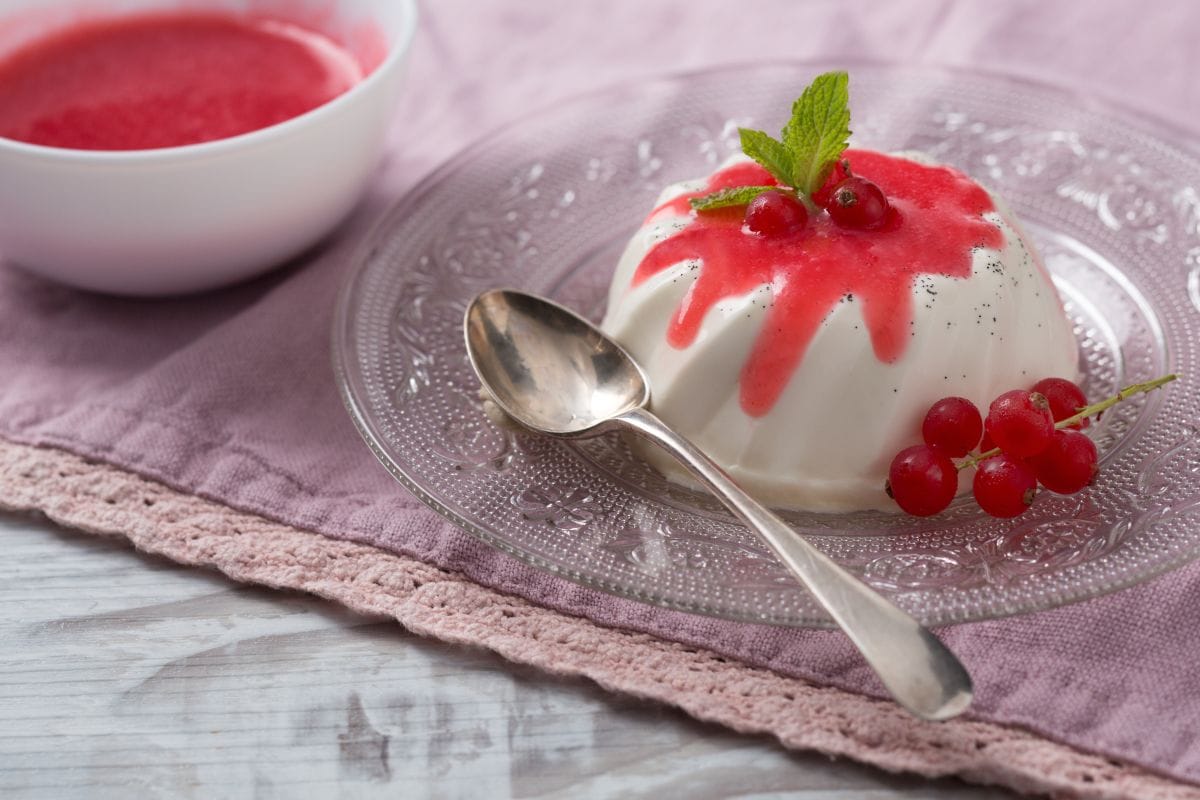
When a panna cotta goes wrong, it turns into a stiff, bouncy block that resembles a gelatin shot, or it separates into a greasy top layer and a watery bottom.
Many home cooks assume that fixing a stiff dessert simply means guessing and cutting down the amount of gelatin powder used. In reality, working with gelatin requires understanding a precise chemical transformation driven by protein uncoiling, hydration boundaries, and thermal setting limits. By mastering the exact ratio of gelatin to liquid and knowing how acids, sugars, and enzymes interact with protein networks, you can consistently engineer the ultimate delicate melt.
The Molecular Blueprint: Triple-Helix Collagen Chains
To manage the texture of a gelatin-set dessert, you must understand what happens to these proteins on a microscopic scale. Gelatin is derived from collagen, a tough structural protein found in animal tissues. In its natural dry state, gelatin consists of long, twisted protein chains bound tightly together in a triple-helix formation.
When you introduce this powder to a dessert base, it must undergo a multi-stage structural evolution:
The Bloom Phase (Hydration): Dry gelatin cannot dissolve in hot liquid immediately. It must first be soaked in cold water, a process called blooming. The cold water molecules seep into the dry spaces, uncoiling the tight protein helices and swelling the granules into a soft, hydrated sponge.
The Thermal Melt (Denaturation): When the hydrated sponge enters a warm liquid (above 104°F / 40°C), the weak chemical bonds holding the proteins together break completely. The triple helices uncoil entirely, scattering the long protein strands freely across the liquid base.
The Gelation Pass (Setting): As the liquid cools below 60°F (15°C) in the refrigerator, the scattered protein strands move closer together. They attempt to reform their original triple-helix shape, trapping the surrounding cream, milk, and sugar molecules tightly inside a complex, three-dimensional physical cage.
The Gelatin-to-Liquid Strength Matrix
To control the exact firmness of your dessert, you must balance the total weight of your liquid against the strength of your protein cage:
Over-Set Block (2% Gelatin by Weight): Builds a dense, tightly locked protein mesh. This results in a bouncy, rubbery texture that resists melting on the tongue and requires chewing. This is best avoided for delicate plates.
The Bakery Standard (1% Gelatin by Weight): Builds a stable, resilient network. This provides just enough strength to allow a dessert to be unmolded cleanly from a plastic cup while preserving a soft, creamy break. This is ideal for catered banquets.
The Elite Delicate Melt (0.5% to 0.7% Gelatin by Weight): Builds a fragile, borderline mesh network. This results in a dessert that can only be served directly inside a glass or ramekin. It cannot hold its own weight on a plate, but it delivers an ultra-luxurious texture that melts instantly at human body temperature (98.6°F / 37°C).
1. Ingredient Saboteurs: Acids, Sugars, and Enzymes
Even if you measure your gelatin perfectly, the presence of certain ingredients can completely dismantle your protein cage before it can set.
The Protease Attack
If you attempt to make a panna cotta or jelly featuring fresh tropical fruits like pineapple, kiwi, papaya, or mango, your dessert will remain a stubborn, runny liquid forever.
These raw fruits contain powerful proteolytic enzymes (such as bromelain in pineapples). These enzymes act like microscopic scissors, physically shredding the long gelatin protein strands into tiny pieces. Because the strands are chopped up, they can never link together to build a cage, no matter how cold your refrigerator gets. To use these fruits safely, you must cook them completely first to destroy the destructive enzymes with heat.
2. Managing the Emulsion: Preventing Temperature Separation
A common visual failure in panna cotta is a distinct two-layer split: a dense, rubbery jelly layer at the bottom of the glass and a thick, greasy layer of white fat at the top.
The Perils of Early Chilling
This separation happens because the dessert base was poured into glasses while it was still hot, or it was chilled too rapidly in a freezer.
Dairy fat and water naturally want to separate. Gelatin can only trap the dairy fat if the liquid begins to thicken before the fat has a chance to float to the top. If the hot liquid is left undisturbed, the heavy gelatin proteins sink to the bottom while the light cream fat floats upward. Whisking the mixture gently over an ice bath until it cools to room temperature ensures that the liquid thickens slightly, locking the fat and water into a stable, permanent suspension before it sets solid.
Step-by-Step Precision Gelatin Protocol
Follow this exact sequence to ensure smooth distribution and a perfect, lump-free set.
Execute the Cold Powder Bloom: Measure your liquid base carefully. For every 2 cups (500 ml) of total cream and milk, use exactly 1 teaspoon (approx. 3 grams) of pure, unflavored gelatin powder for a delicate glass set. Sprinkle the powder evenly over 2 tablespoons of cold water in a small bowl. Let it sit undisturbed for 5 to 10 minutes until the liquid is fully absorbed and a thick, wrinkled sponge forms.
Warm the Dairy Base Gently: Combine your milk, cream, and sugar in a saucepan over medium heat. Warm the mixture until the sugar dissolves completely and the liquid reaches roughly 140°F (60°C)—it should feel hot to the touch but must never reach a boil. Boiling gelatin for an extended period degrades the protein strands, cutting its setting power by half.
Dissolve and Emulsify Completely: Remove the saucepan from the stove. Drop the hydrated gelatin sponge directly into the warm dairy liquid. Whisk steadily for 1 full minute until the gelatin melts completely and leaves zero gritty grains at the bottom of the pot.
The Ice Bath Pre-Chill Pass: Place the saucepan inside a larger bowl filled with ice water. Stir the liquid gently with a rubber spatula for 5 minutes until it cools down to room temperature and takes on the consistency of thin heavy cream. Pour the cooled liquid into your serving glasses and chill in the refrigerator for at least 4 full hours before serving.
Troubleshooting Gelatin Disasters
Problem: The Panna Cotta Contains Tiny, Hard, Chewy Lumps Throughout
The Cause: You added dry gelatin powder directly into hot liquid without blooming it in cold water first, or your melted sponge was not stirred enough. The outer edges of the dry powder clumped together instantly upon hitting the heat, forming a waterproof seal that kept the center dry and hard. Always bloom in cold water first.
Problem: The Dessert Refuses to Firm Up and Stays Fluid After 12 Hours
The Cause: You likely added raw tropical fruit containing active enzymes that destroyed the protein chains, or you severely over-heated the gelatin during mixing. If your powder is old and has been exposed to kitchen humidity, it can also lose its strength. Ensure your ingredients are heated correctly and fruits are cooked.
Problem: The Unmolded Dessert Tore Apart and Stuck to the Mold
The Cause: The suction inside the mold tore the delicate protein mesh as you lifted it. To unmold a panna cotta cleanly, dip the absolute bottom of the plastic or metal mold into hot water for exactly 3 seconds to slightly melt the outer microscopic layer of gelatin. Invert the plate over the mold, shake firmly sideways, and lift slowly.