When shopping for baking ingredients, most people pick up whatever standard tin of cocoa powder is available on the supermarket shelf. They flip the container over, verify that it reads "100% cocoa," and assume that all unsweetened powders perform identically in a mixing bowl.
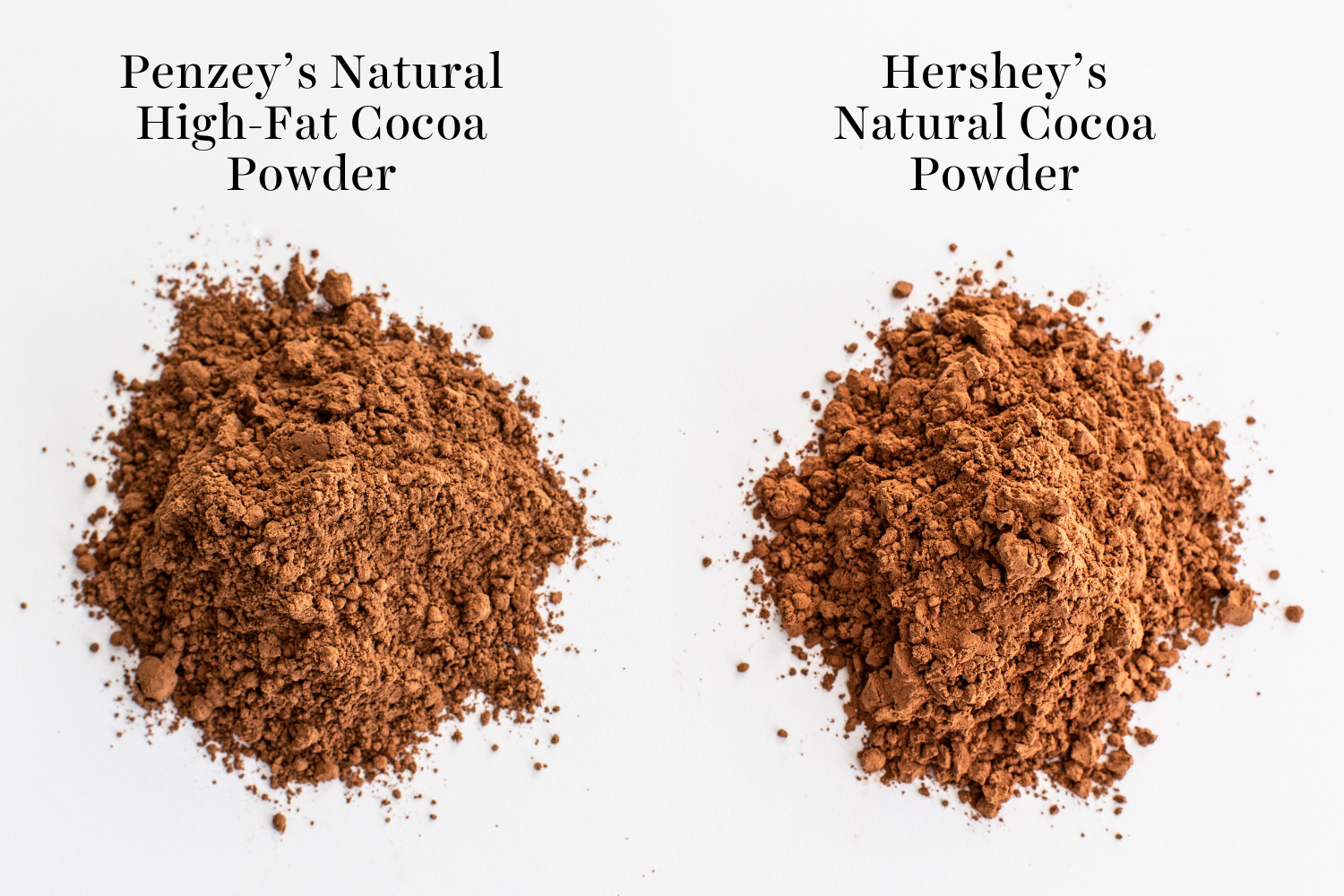
This is one of the most overlooked variables in home baking. If you have ever used the exact same recipe twice and ended up with a moist, fudgy masterpiece the first time, but a dry, pale crumb the second time, the fat content of your cocoa powder is the likely culprit.
In professional pastry kitchens, cocoa powder is categorized not just by its processing method, but by its residual cocoa butter percentage. Cocoa powder is not a single static ingredient; it is a complex balance of dry starches and rich vegetable fats. By understanding the functional science behind high-fat and low-fat cocoa powders, you can deliberately control the moisture, flavor delivery, and structural stability of your brownies and dessert bars.
The Industrial Separation: Processing the Cocoa Bean
To understand where these fat percentages come from, you have to look at how cocoa beans are processed in the factory.
A raw cocoa bean is naturally composed of roughly 50% to 55% cocoa butter (fat) and 45% to 50% dry cocoa solids. To create cocoa powder, giant industrial hydraulic presses squeeze the roasted beans to extract the valuable liquid cocoa butter, which is diverted to make solid chocolate bars and cosmetics.
The dry, compacted cake that remains is ground into the fine powder we buy in stores. However, the hydraulic presses do not remove all of the fat. Depending on the setting of the machinery, varying amounts of cocoa butter are left behind in the powder, splitting production into two distinct categories:
Low-Fat Cocoa Powder (Standard Grocery Grade): This powder contains between 10% and 12% residual cocoa butter. It is highly processed, extracting maximum fat to lower manufacturing costs.
High-Fat Cocoa Powder (Premium Pastry Grade): This powder retains between 22% and 24% residual cocoa butter. It is deliberately left under-pressed to preserve the rich, natural qualities of the cocoa bean.
The Cocoa Powder Performance Matrix
To map out how these structural differences alter your baking tray, you can easily track how shifting from a standard grocery powder to a premium high-fat powder impacts your batter:
Low-Fat Powder (10% to 12% Fat): Features exceptionally high starch absorbency. It creates a drier, firmer crumb structure and delivers an aggressive, sharp, and upfront chocolate bitterness. This is best used for sturdy structural cakes and crispy chocolate biscotti.
High-Fat Powder (22% to 24% Fat): Features incredibly low starch absorbency. It creates an ultra-moist, meltingly tender, and fudgy texture while delivering a smooth, rounded, and long-lasting chocolate flavor. This is the absolute gold standard for rich fudgy brownies, truffles, and gooey bars.
1. The Low-Fat Profile: Managing the Starch Sponge
If your recipe relies on standard grocery-store cocoa powder, you are working with an ingredient that behaves more like extra flour than a flavoring agent.
The Problem of High Absorbency
Because low-fat cocoa powder is nearly 90% pure dry solid matter, its microscopic particles are incredibly thirsty. The moment it enters your mixing bowl, it acts like an aggressive sponge, drinking up the liquid fats from your butter and the moisture from your eggs.
If you use a low-fat powder in a delicate brownie recipe without adjusting your liquids, the dry starches will swell up and build a rigid structural wall, pulling moisture away from the core and turning what should be a fudgy center into a dry, cakey crumb.
2. The High-Fat Advantage: Unlocking Melting Fudginess
For elite brownies and dessert bars where a dense, melt-in-your-mouth texture is the ultimate goal, high-fat cocoa powder is irreplaceable.
Flavor Delivery and Texture Cohesion
Cocoa butter is a highly unique fat that remains completely solid at room temperature but melts instantly at human body temperature (around 93°F / 34°C). When you bake with a 22-24% high-fat cocoa powder, that extra cocoa butter integrates smoothly throughout the batter.
Once your brownies cool on the counter, the cocoa butter firms up into a delicate, solid network. The absolute second a piece touches your tongue, that fat collapses and melts completely, creating that signature, silky, and luxurious fudginess that low-fat powders simply cannot reproduce.
Step-by-Step Adjustment Protocol for Better Baking
You do not need to throw away your standard cocoa powder; you can manually adjust your recipe to mimic the effects of premium high-fat cocoa by managing your kitchen measurements carefully.
Check the Nutritional Label: Before starting your recipe, flip your cocoa container to the nutritional facts panel. Look at the serving size (usually 5 or 6 grams) and check the fat content. If it reads 0.5 grams of fat per serving, you are using a 10% low-fat powder. If it reads 1.0 or 1.5 grams of fat, you have a premium high-fat powder.
Execute the Low-Fat Moisture Compensation: If your recipe assumes a high-fat pastry powder but you only have standard 10-12% grocery cocoa on hand, you must manually re-introduce fat to prevent dryness. For every ½ cup of low-fat cocoa powder your recipe requires, add an extra tablespoon of melted unsalted butter or a teaspoon of neutral vegetable oil to your wet ingredients.
Sift and Hydrate Accurately: Because high-fat cocoa powder contains double the oil content, its particles naturally clump together tightly inside the storage container. Always run your high-fat cocoa through a fine-mesh sifter before adding it to your batter to ensure smooth distribution and prevent bitter, unmixed pockets of fat from forming in your baked bars.
Scale Down Your Flour Mass: When working with low-fat cocoa powder, consider reducing the total all-purpose flour in your recipe by 1 to 2 tablespoons. Removing a small fraction of the flour counteracts the aggressive water absorption of the dry cocoa solids, keeping your brownie core safely within the moist, fudgy zone.
Troubleshooting Cocoa Powder Failures
Problem: The Brownies Are Pale Gray-Brown and Taste Chalky
The Cause: You used a low-fat, non-alkalized (natural) cocoa powder. Natural low-fat powders have a high acid content and very few fats, which leads to a light, washed-out color and a dry texture. To get a deep, dark appearance and a rich bite, switch to a high-fat Dutch-processed powder.
Problem: The Batter is Incredibly Thick and Sticky, Turning Hard in the Oven
The Cause: You accidentally over-measured your low-fat cocoa powder. Because low-fat cocoa absorbs double the moisture of flour, even a tiny over-measurement will completely dry out the egg emulsion. Always spoon your cocoa into your measuring cup and level it off with a knife, or use a digital scale for exact weights.
Problem: The High-Fat Brownies are Oily and Tearing Apart
The Cause: You added extra oil or butter to your recipe while using a premium 22-24% high-fat cocoa powder. Because the powder already brought a large volume of cocoa butter into the pan, the extra added fat overwhelmed the flour starches, causing the emulsion to break. Do not add extra fat adjustments when using premium pastry-grade cocoa.