When you bite into a fresh, bakery-grade croissant or a piece of puff pastry, you are greeted by an unmistakable architectural marvel. A perfect pastry shatters into hundreds of paper-thin, crispy leaves before melting away on the tongue. It feels incredibly light, yet rich and luxurious.
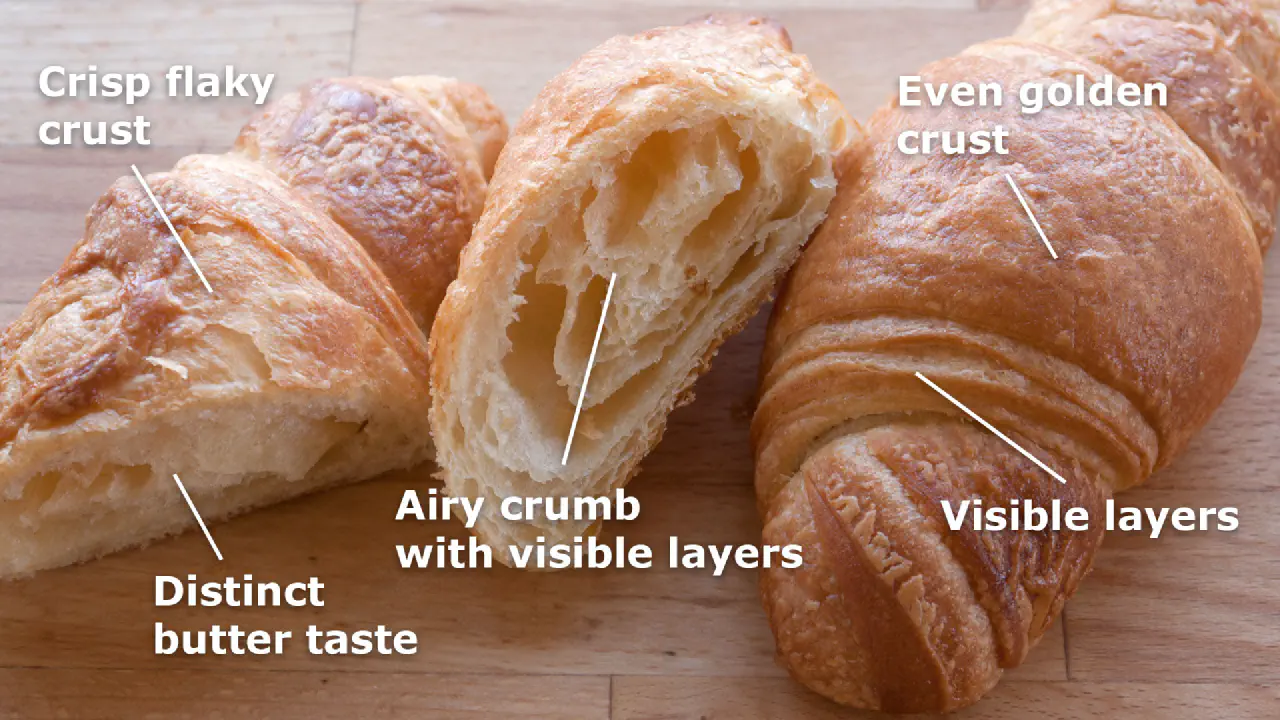
When a homemade pastry turns out dense, heavy, or doughy inside, bakers often think they didn't use enough butter or over-kneaded the flour.
In reality, the secret to those beautiful flakes relies entirely on a mechanical baking technique known as lamination. Lamination is the process of repeatedly folding a sheet of cold butter into a flour dough to create alternating microscopic layers. By mastering the strict relationship between fat temperature and gluten elasticity, you can control the expansion of these layers and achieve a spectacular rise every single time.
The Physics of the Flake: Steam Separation
To understand how lamination works, you have to look at what happens inside your oven when a layered pastry begins to bake. It is a physical transformation driven by moisture evaporation and structural trapping.
A piece of laminated dough consists of hundreds of thin sheets of dough separated by paper-thin sheets of solid fat.
When the pan enters a hot oven (usually around 400°F / 204°C), the water content trapped inside the butter layers instantly reaches its boiling point and flashes into steam. Because the steam is trapped beneath a layer of flour dough, it expands upward, physically lifting the dough sheet above it like a tiny hydraulic jack. As the steam pushes the layers apart, the heat cooks the flour starches and egg proteins, setting the open gaps into a permanent, crispy structure while the butter fat melts into the dough to add incredible richness.
The Lamination Performance Matrix
To see how handling impacts your layers, you can easily track how the physical state of your fat completely alters your pastry's final structure:
Perfect Thermal Alignment (55°F to 65°F / 13°C to 18°C): The butter matches the exact flexibility of the dough. It rolls out smoothly into unbroken, continuous sheets, resulting in hundreds of distinct, paper-thin crispy layers and a towering, open honeycomb rise. This is the absolute gold standard for croissants and puff pastry.
Too Cold and Brittle (Under 50°F / 10°C): The butter is completely solid and hard. When rolled, it shatters into jagged shards inside the dough, tearing holes in the gluten wall and causing the internal steam to escape, leaving you with a flat, heavy bake.
Too Warm and Soft (Over 70°F / 21°C): The butter reaches its melting point prematurely. It sinks straight into the flour grains, turning your layered dough into a standard, greasy pie crust with zero layer separation.
1. Plasticity: Matching the Flexibility of Dough
The single most critical concept in pastry lamination is plasticity—the ability of solid butter to bend, stretch, and shape without breaking or melting.
The Butter Block Secret
To successfully laminate pastry, your butter block must be the exact same consistency and flexibility as your flour dough. If your butter is too hard, it will rip through the dough like glass. If it is too soft, it will blend into the flour like oil.
Professional bakers use European-style butter because it has a lower water content and a higher fat percentage (around 82% to 85% butterfat) than standard grocery store butter. This composition makes it highly pliable and elastic when chilled, allowing you to roll it out into a micro-thin sheet that stretches smoothly alongside your gluten walls without a single tear.
2. Managing Gluten Elasticity: The Crucial Chilling Rest
Every time you use a rolling pin to flatten your pastry dough, you are exerting immense physical force on the gluten network.
Preventing the Snap-Back
Rolling out dough pulls and stretches the glutenin and gliadin protein strands, building a high amount of physical tension. If you try to fold and roll the dough again immediately, the tense gluten network will resist the pin, snapping back aggressively and crushing the delicate butter sheets hidden inside.
To prevent this structural failure, you must rest the dough in the refrigerator for at least thirty minutes after every single fold (or "turn"). The cold temperature relaxes the tight gluten bonds, making the dough cooperative for the next round of rolling, while ensuring the butter stays safely within its plastic temperature zone.
Step-by-Step Protocol for Perfect Lamination (The Classic Single Turn)
The Dough and Butter Prep: Roll your fermented flour dough (the détrempe) into a neat square. In a separate sheet of parchment paper, pound a cold block of European-style butter into a flat rectangle that is exactly half the size of your dough square. Ensure both components feel equally flexible.
The Lock-In Pass: Place the cold butter block diagonally in the center of your dough square. Fold the four corners of the dough over the butter so they meet in the middle, completely enclosing the fat like an envelope. Seal the edges firmly with your fingers so no butter can escape.
The Roll and Stretch: Lightly dust your counter with flour. Press your rolling pin down firmly in ridges along the dough to distribute the butter evenly, then roll the envelope out into a long, smooth rectangle that is three times longer than it is wide.
Execute the Letter Fold: Take the bottom third of the dough rectangle and fold it up over the center. Take the top third and fold it down over the middle, exactly like folding a business letter. This completes your first "single turn," instantly multiplying your single layer of butter into three distinct sheets.
The Cold Relaxation Rest: Wrap the dough block tightly in plastic wrap to trap the ambient moisture. Place it in the absolute coldest part of your refrigerator for 30 to 45 minutes to relax the gluten proteins and firm up the butter before rolling out your next turn.
Troubleshooting Lamination Failures
Problem: A Large Pool of Yellow Grease is Leaking Onto the Pan During Baking
The Cause: Your proofing environment was too hot, or your oven temperature was too low. If you let shaped croissants rise in a room warmer than 80°F (27°C), the hidden butter layers will melt entirely before the bread ever hits the oven. The fat separates from the starches, leaving you with a greasy puddle and a flat pastry.
Problem: The Pastry Looks Beautiful on the Outside but is Doughy and Raw in the Center
The Cause: You rolled too many folds into the dough, causing the layers to become so microscopically thin that they collapsed into each other. For standard puff pastry, stick strictly to six single turns; going beyond this threshold destroys the definition between the dough and fat, transforming your layers back into a solid mass of raw dough.
Problem: The Outer Skin of the Pastry is Ripping and Exploding During the Roll
The Cause: Your butter block was far too cold and hard when you initiated the lock-in step, causing it to break into solid pieces under the pin. When you forced it to stretch, the hard shards tore straight through the delicate outer flour skin. Always let your chilled butter block sit on the counter for five minutes to achieve perfect pliability before rolling.