Granola bars are the ultimate convenient snack. They are perfect for quick breakfasts, school lunchboxes, and energy boosts during a busy day. Making them at home allows you to control the sugar levels and load them up with healthy oats, nuts, and seeds. However, many home bakers run into a highly frustrating problem on their first attempt: the bars turn out incredibly crumbly, shattering into loose granola the second you try to slice them or lift them out of the pan.
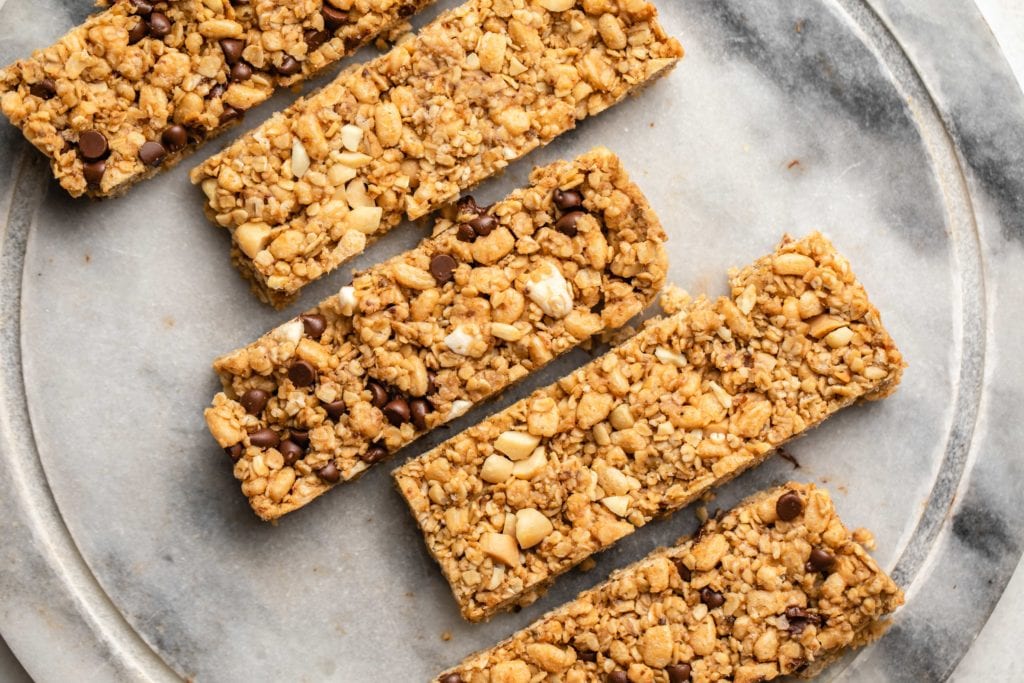
In professional baking, a granola bar is treated as a precise balance between dry structural elements and liquid sugar binders. Bars fall apart because the dry ingredients are not fully hydrated or the liquid binders lack the structural strength to lock everything together. By understanding the science of sticky sugars, packing density, and thermal setting, you can create homemade chewy granola bars that hold their shape perfectly without crumbling.
The Core Equation: Dry Aggregates vs. Sticky Binders
To build a stable granola bar, you have to look at how your dry ingredients interact with your wet sweeteners. Think of baking a granola bar like mixing concrete: you need the right ratio of gravel (oats and nuts) to cement (liquid sugars) for it to set solid.
The Oats and Nuts (The Structure): Rolled oats provide the bulk of the bar. Because they are dry and porous, they naturally want to push away from each other. Chopped nuts and seeds add flavor, but their smooth surfaces make it difficult for liquids to grip.
The Liquid Sugars (The Glue): You cannot use basic water or milk to hold a granola bar together; it will simply evaporate in the oven and leave you with dry cereal. You must use heavy, viscous liquid sugars like honey, maple syrup, brown rice syrup, or melted dark brown sugar molasses. These sugars contain highly sticky molecules that wrap around the oats, creating a thick web that hardens as it cools.
Liquid Binder Comparison Matrix
Brown Rice Syrup: Features exceptionally high stickiness and maximum holding power. It creates a highly durable chew and guarantees bars will never crumble, though it offers a low sweetness profile.
Honey: Offers high stickiness and a beautiful, classic floral flavor. It creates a soft, traditional chewiness but can become runny if kept in a warm environment.
Maple Syrup: Provides a moderate stickiness level and a rich, deep woody flavor. It creates a slightly softer, more delicate bar that requires a longer baking time to set firm.
Corn Syrup: Delivers excellent stickiness and zero added flavor. It creates a commercial-style texture and high structural stability, though it lacks the health benefits of natural syrups.
1. The Power of Density: Packing the Pan
Even with the perfect ratio of honey and oats, your granola bars will fail if you do not pack them into the baking pan with enough physical force.
Eliminating the Air Pockets
When you pour granola mix into a pan, the irregular shapes of the oats and nuts create millions of tiny hidden air pockets. If you leave these air pockets intact, the liquid sugar will pool at the bottom of the pan, leaving the top layer dry.
To prevent this, you must press the mixture down into the pan as firmly as humanly possible. Use the flat bottom of a heavy drinking glass, a metal measuring cup, or a stiff square of parchment paper to crush the mixture down into a solid, compressed sheet. This force drives the sticky syrup deep into every single pore of the oats, locking the ingredients into a dense, unbreakable grid.
2. Setting the Chew: To Bake or Not to Bake?
Granola bars generally fall into two categories, and each requires a different thermal process to set the sugars:
Baked Granola Bars: These bars go into a low oven (325°F / 160°C) for 20 minutes. The heat boils the water content out of the honey or maple syrup, concentrating the sugars. As the bars cool down, the concentrated sugar solidifies into a chewy, firm glaze that locks the oats in place.
No-Bake Granola Bars: These recipes skip the oven entirely. Instead, you boil your honey and nut butter on the stove for 60 seconds before mixing in the oats. Once pressed into the pan, the tray is placed straight into the refrigerator. The cold temperature solidifies the coconut oil, butter, and sugars instantly, creating a firm bond without any baking required.
Step-by-Step Protocol for Unbreakable Granola Bars
Toast the Dry Foundation: Spread your rolled oats and chopped nuts onto a large rimmed baking sheet. Toast in the oven at 350°F (175°C) for 8 to 10 minutes until they are fragrant and pale golden. Toasting dries out the raw moisture in the oats, allowing them to absorb your liquid glue much more efficiently.
Boil the Liquid Glue Base: In a small saucepan over medium heat, combine your honey, brown sugar, and a splash of oil or nut butter. Bring the mixture to a gentle boil, stirring continuously. Let it bubble steadily for exactly 1 minute, then remove from the heat. This boiling stage concentrates the sugars so they harden properly later.
Combine and Coat Uniformly: Pour your hot liquid sugar syrup directly over the toasted oat mixture. Use a sturdy rubber spatula to fold the ingredients together continuously for 2 minutes. Ensure every single flake of oat is completely coated in the sticky syrup; any dry spot will become a point of failure where the bar will crumble.
Compress and Chill Firmly: Transfer the mixture into a parchment-lined metal pan. Grab a flat-bottomed object and press down with your full body weight to compress the sheet into a dense layer. Bake at 325°F (160°C) for 20 minutes. Once removed from the oven, let them cool for 30 minutes, then transfer the pan into the refrigerator for 2 full hours before slicing into bars.
Troubleshooting Crumbly Snack Bars
Problem: The Bars Shatter into Loose Granola the Second You Cut Them
The Cause: You likely tried to slice the bars while they were still warm, or you did not press the mixture down hard enough into the pan. Warm sugars are fluid and weak. Always chill your granola tray in the refrigerator for at least two hours so the sugars can fully freeze and lock before your knife touches them.
Problem: The Bars Are Intolerably Hard and Break Your Teeth
The Cause: You boiled the honey and sugar mixture for too long on the stove, or your oven temperature was too high. When sugar is boiled for too long, it transitions from a soft, chewy stage into a hard-crack candy stage. Keep your stove boiling time strictly to 60 seconds to preserve a soft chew.
Problem: The No-Bake Bars Melt and Turn Slimy at Room Temperature
The Cause: Your recipe relies heavily on coconut oil or butter as a binder without enough sticky sugar. Coconut oil melts completely at 76°F (24°C). If you are taking these bars on a warm outdoor hike, ensure your recipe uses honey or brown rice syrup as the primary anchor, and store the bars wrapped in parchment paper inside a cool bag.